With Dialpad Meetings for Salesforce, you can view Salesforce insights straight from your Participant's profile, automatically log your meetings and even schedule Dialpad Meetings straight from Salesforce!
Additionally, your meetings will be saved under the Activity History for the following standard objects:
Lead
Opportunity
Account
Contact
Case
Let's dive into the details of this integration.
Who can use this
The Dialpad Meetings for Salesforce integration is available to all Dialpad Meetings users.
Connect Dialpad Meetings to Salesforce
To get started, you’ll need to enable Dialpad Meetings for Salesforce.
There are 3 ways you can connect to Salesforce:
From the Dialpad Meetings dashboard
From the participant’s user profile
From the Start Meeting room
From the Dialpad Meetings dashboard
Select Menu
Select Account
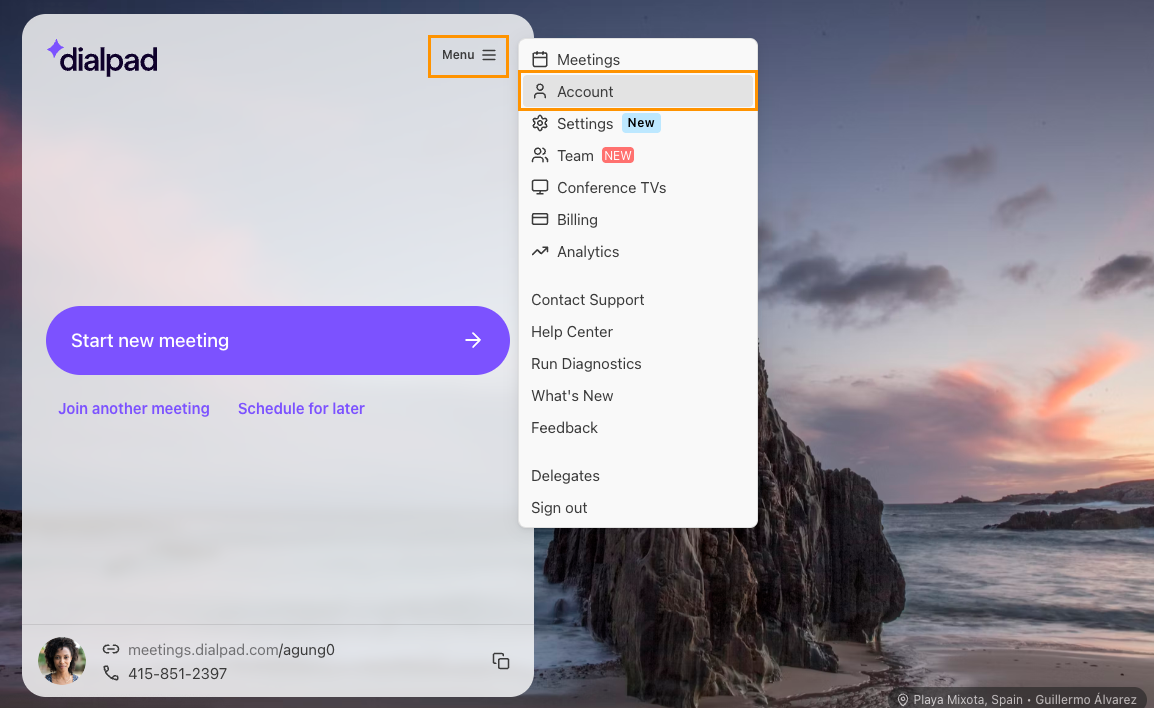
Navigate to Integrations
Beside Salesforce, slide the Connect account toggle on
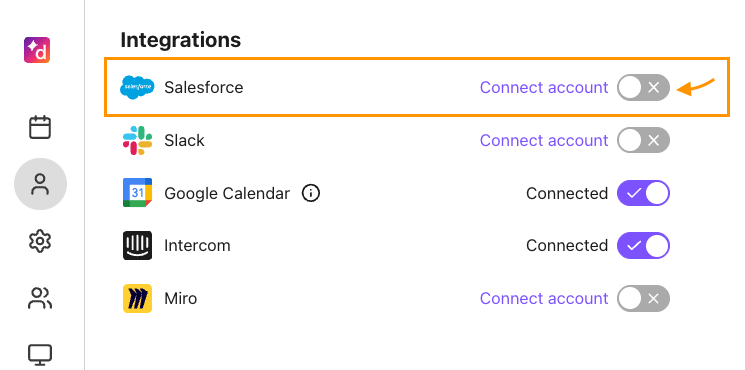
Log in to Salesforce
Follow the setup prompts
From the participant’s user profile
Select Participants during an active meeting
.png)
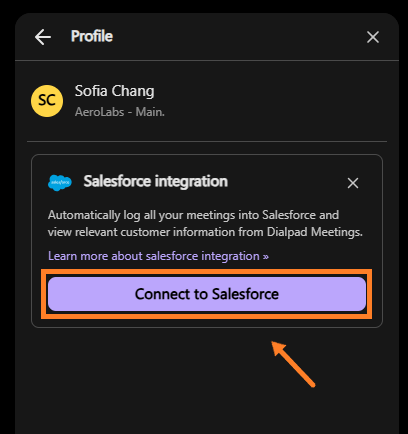
Select the options menu beside the participant’s name
Select User profile
Select Connect to Salesforce
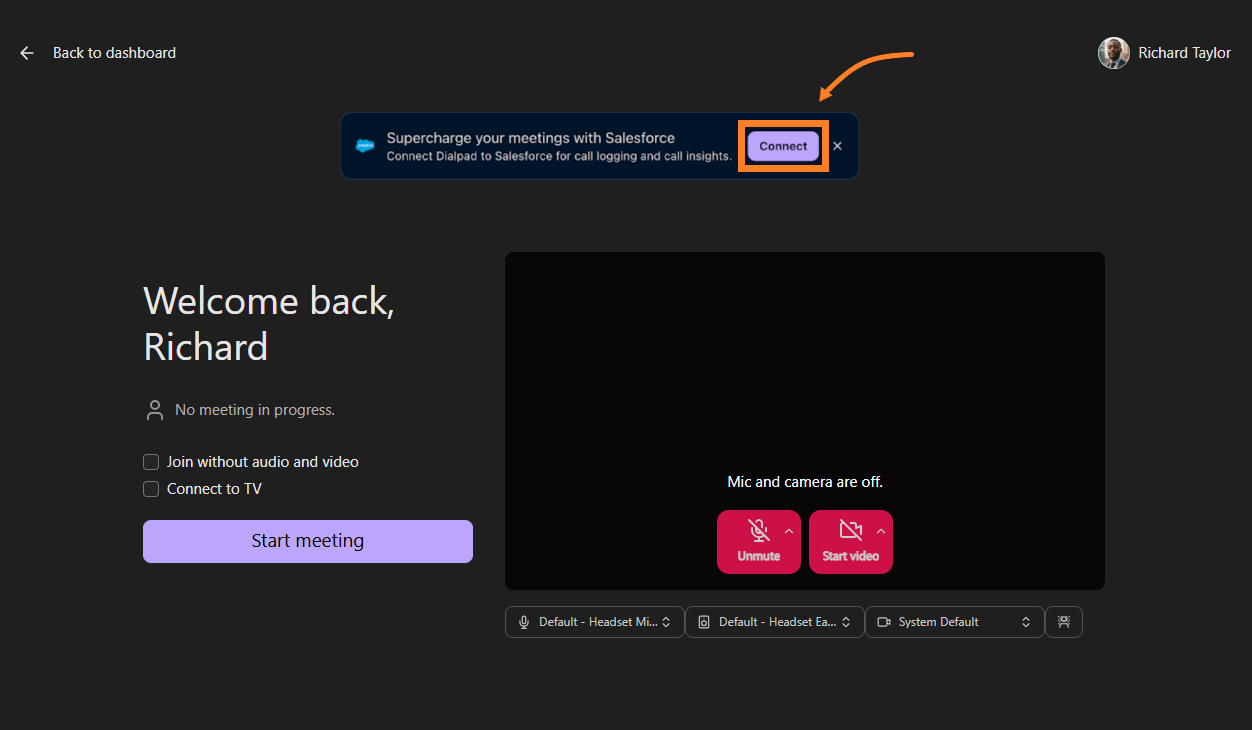
From the Start Meeting room
Once you start a meeting, a quick pop-up will appear to help you connect Dialpad Meetings to Salesforce.
Contact matching
Dialpad Meetings matches your Salesforce Leads and Contacts using the email, phone number, and name on your Dialpad Meetings account, checking email first for the best match.
If we find one match, Salesforce will automatically map it to the correct contact. If multiple matches are found, you’ll need to map them to the correct contact.
You can turn on the Require guest email to join meeting setting to improve contact matching and prompt participants to enter their email before joining a meeting.

Note
Participants must be matched to a Salesforce record.
The first match is manual, but future meetings will match automatically. You can rematch participants at any time if needed and be sure to check their profile details to avoid incorrect matches.
Incorrect match
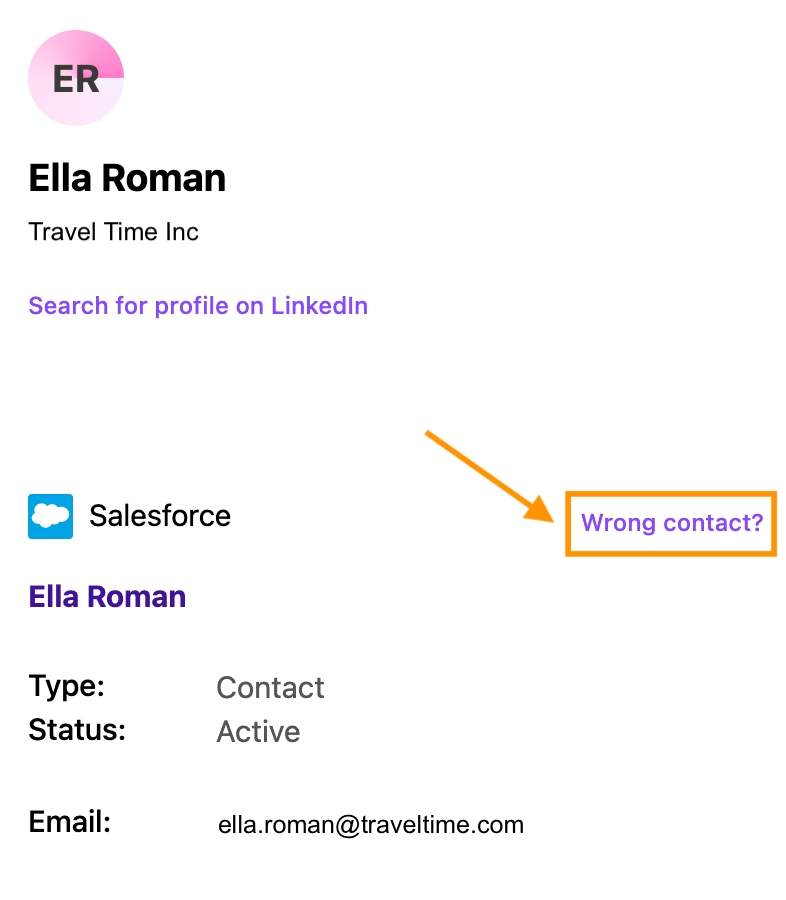
If the connected Salesforce contact is incorrect, select Wrong contact? and search for the correct contact name.
Manually create a Dialpad Meetings contact
If you're having issues with contact matching, you can create the contact in Dialpad Meetings first, and then link to Salesforce via their profile. Once linked, the Participant will also appear in your Salesforce contact data.
Tip
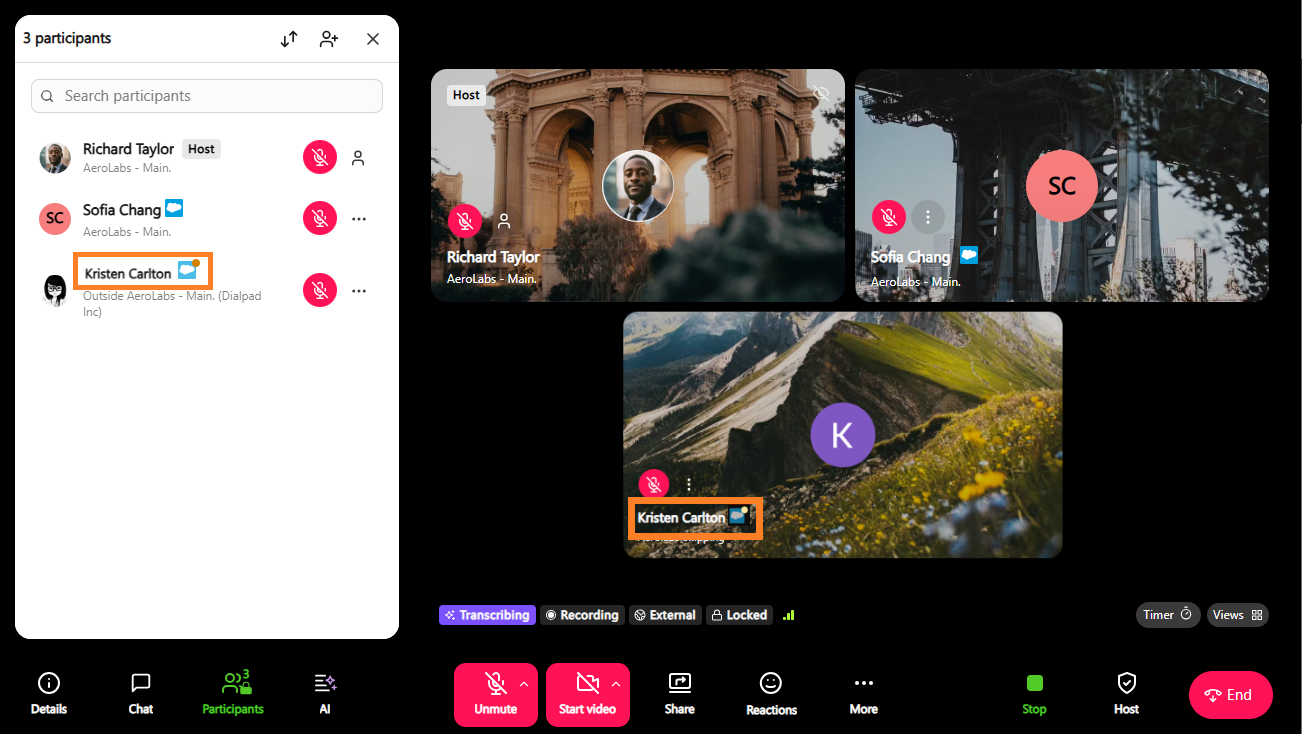
You can tell whether a participant is matched in Salesforce by the icon next to their name in the participants panel and their profile card.
Activity logging
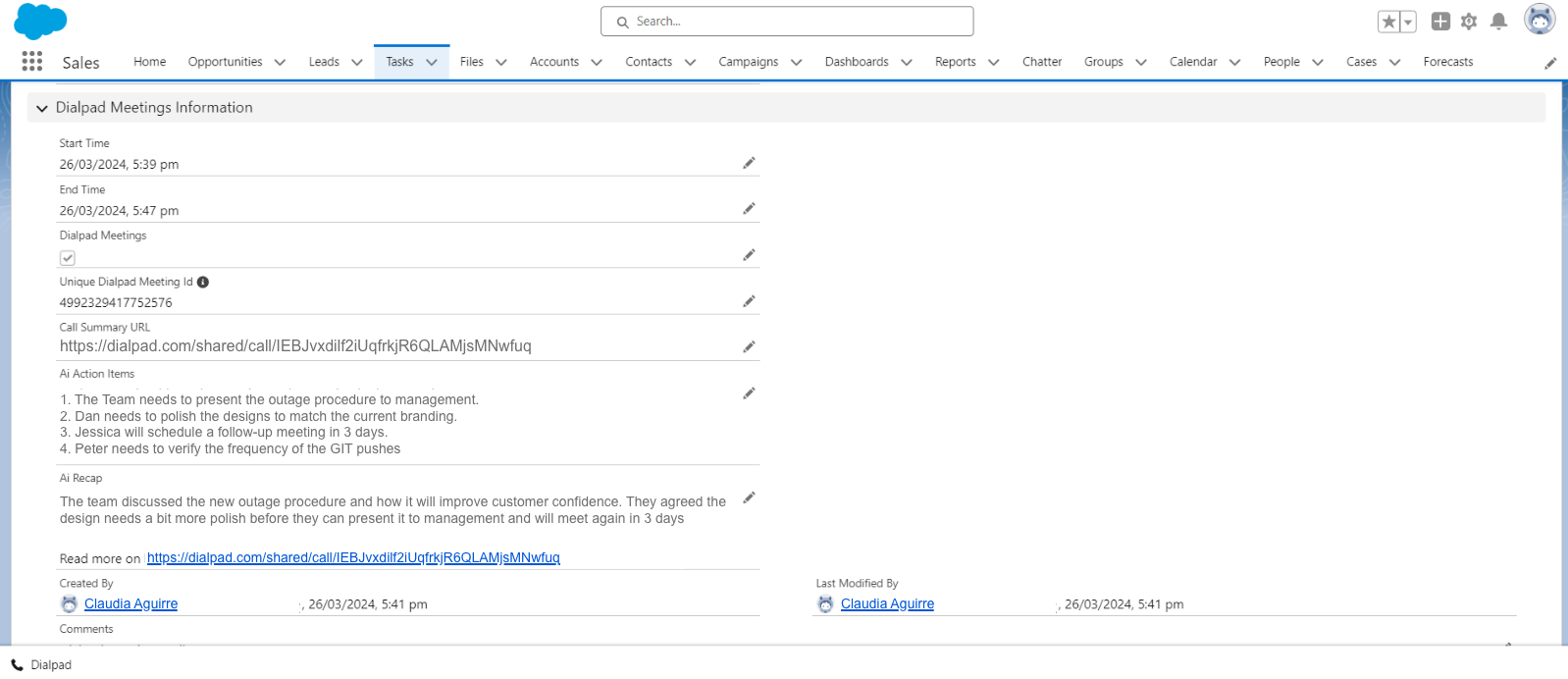
Dialpad Meetings can automatically log meeting activity to Salesforce. Depending on your Salesforce configuration, meeting activity can appear as standard Salesforce Events and Tasks or as dedicated Dialpad Meeting Log records.
Standard Salesforce activity records
Dialpad Meetings can create:
An Event when the meeting starts.
A Task after the meeting ends.
When Dialpad matches the meeting to the correct Salesforce record, the logged activity can include:
Meeting title and ID
Meeting duration
Attendees
Chat log
Meeting recording
Dialpad AI Recap
Dialpad AI Action items
Call summary URL
Note
It can take up to five minutes for a Task to appear after a meeting ends. The information and layout you see depend on your organization's Salesforce configuration.
Custom-object activity logging
If your organization has custom-object logging enabled, Dialpad Meetings can create a dedicated Dialpad Meeting Log record for each meeting.
Custom-object logging supports richer meeting information, additional custom fields, and more comprehensive Dialpad AIAi insights for reporting and workflow automation.
Dialpad can also create Associated Entity records to connect the meeting with related Salesforce records, including:
Contacts
Leads
Accounts
Opportunities
Cases
Other supported Salesforce objects
Associated Entity records contain details that help connect the meeting to the related Salesforce record, such as its name, ID, and URL.
When Dialpad logs a meeting for the first time, it creates the Dialpad Meeting Log and any Associated Entity records needed for the meeting's Salesforce relationships.
If the meeting is already logged, Dialpad updates the existing Meeting Log and adds any related Salesforce records that haven't been linked yet.
Note
Depending on your Salesforce configuration, you may see Events or Tasks alongside custom-object records. These records serve different purposes and aren't necessarily duplicates.
Custom-object logging doesn't create new Leads. It identifies known Leads and Contacts.
Schedule a Dialpad Meeting from Salesforce
Schedule your next Dialpad Meetings without ever leaving Salesforce!
First, you'll need to download the Dialpad Meetings app from the AppExchange.
Once installed, Salesforce teams can schedule meetings either by creating a new event, or through the Dialpad Meetings tab.
Let's take a closer look at each.
Schedule an Dialpad Meeting Event in Salesforce
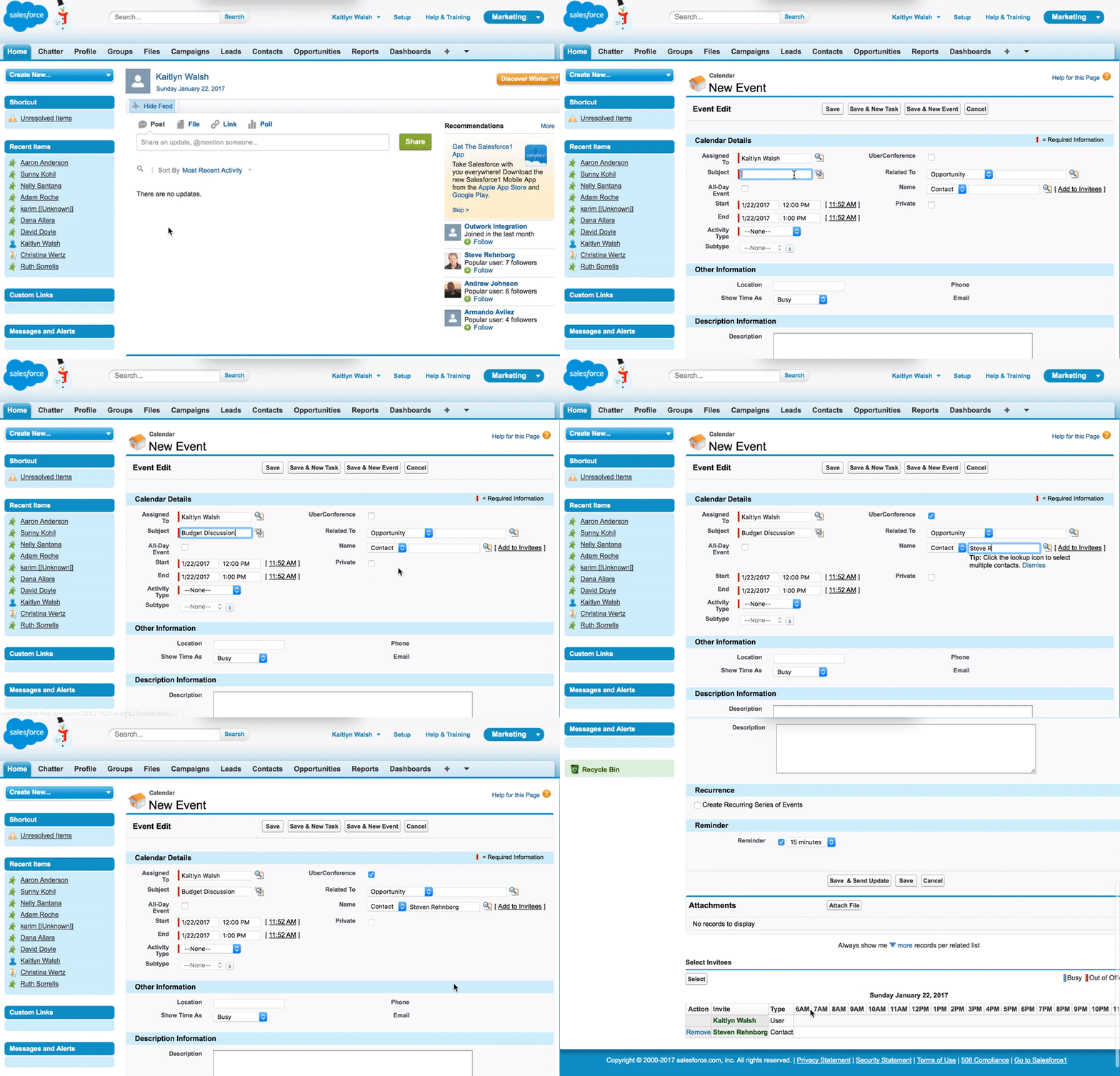
To schedule an Event from Salesforce:
Navigate to Create New
Select Event
Enter the event info (minus your Dialpad Meetings info)
Check the Dialpad Meetings box
Select your Contact, then select Add to Invitees
Select Save, or Save & Send
If you choose Save, the Invitees will receive a Dialpad Meetings invite only.
If you choose Save & Send, the Invitees will receive a Dialpad Meetings invite, and a Salesforce notification.
Schedule a Dialpad Meeting from the Dialpad Meetings tab
To schedule an event the Dialpad Meetings tab in Salesforce:
Select the Dialpad Meetings tab
Search for either a Contact or Lead to add as a Participant
Select either Start Now or Schedule
If you choose Start Now, a meeting invite is sent immediately and you'll automatically e taken to your active Dialpad Meeting
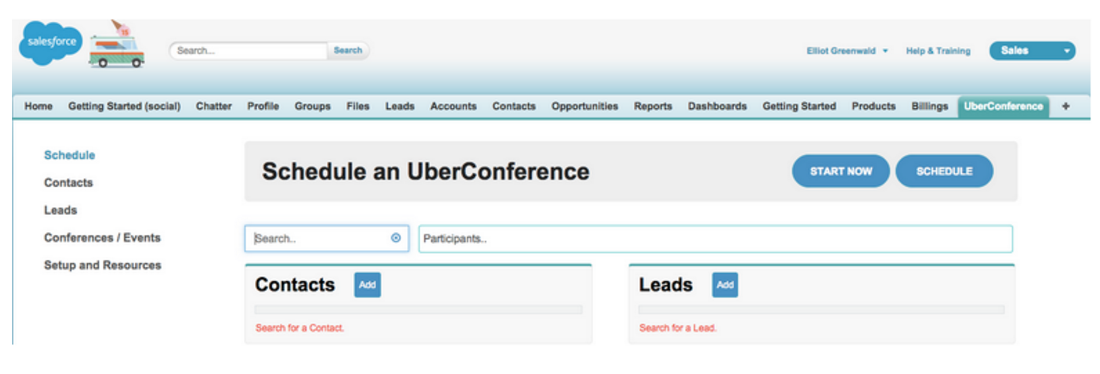
Keep in mind that meetings with existing Contacts/Leads will be logged as a new Event in Salesforce for each occurrence.
Frequently asked questions
What happens if I change a setting in Dialpad Meetings instead of Dialpad?
Changes made in Dialpad Meetings automatically sync to Dialpad. Any updates you make in either app will sync back to Dialpad and stay consistent.
Can I edit a logged Task?
Absolutely! To edit an existing task, open the Task, then select the pencil icon beside the details you’d like to edit.
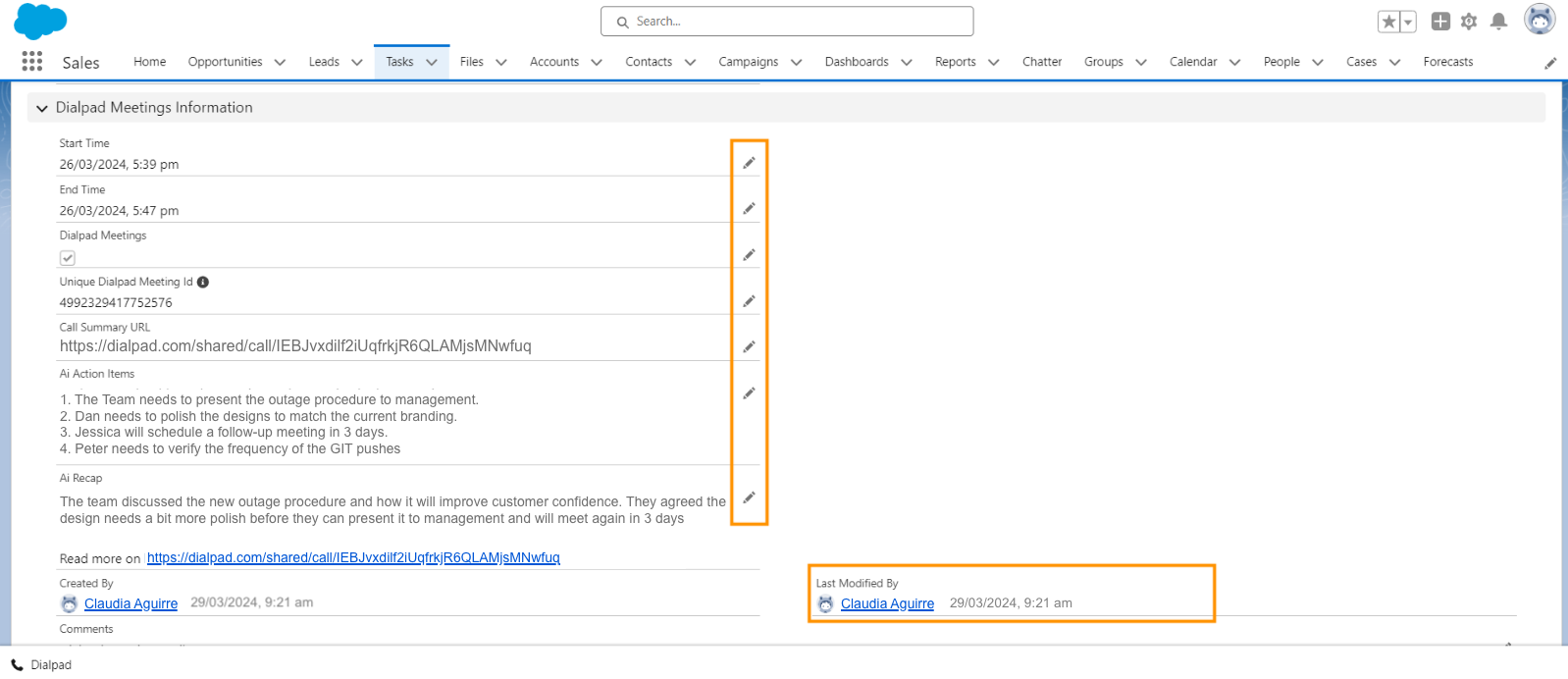
On the bottom right, you’ll see the date the task was last modified, and by who.
Why aren't my meetings being logged?
If your meetings aren't logging in Salesforce, ask yourself the following questions:
Was the Salesforce contact created in Salesforce before your conference call ended?
Is there more than 1 contact with that same name?
Is there more than 1 contact with that same phone number?
If you answered Yes to the questions above and the contact is still not appearing, please reach out to Support.
Why do I see multiple Salesforce records for the same meeting?
Depending on your Salesforce configuration, a single Dialpad Meeting can create multiple records:
Event | Task | Dialpad Meeting Log |
|---|---|---|
Created when the meeting starts and can contain live meeting details, such as the meeting title, participants, scheduled time, meeting link, and status. | Created after the meeting ends and can contain post-meeting information, such as the meeting summary, Dialpad Ai recap, and action items. | Created when custom-object logging is enabled. Associated Entity records can connect the meeting to related Salesforce records. |
These records aren't necessarily duplicates. Events and Tasks support standard Salesforce activity tracking, while Dialpad Meeting Log and Associated Entity records provide richer meeting reporting and relationships.
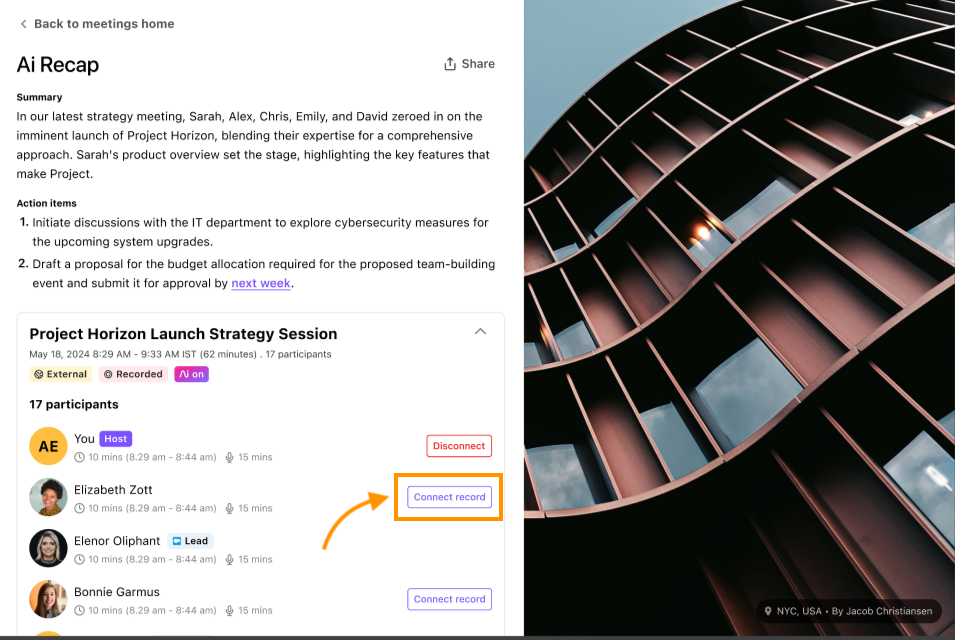
Can I log calls in Salesforce after the Meeting has ended?
Yes, you can log Dialpad Meeting calls in Salesforce from the Meeting’s exit page.
To log a meeting after the meeting ends, select Connect record beside the contact you want to log the meeting to.
Why do I see two records for each meeting?
For each Dialpad meeting, Salesforce logs two distinct records:
An Event that is created at the start of the meeting.
A Task that is created after the meeting ends, once Dialpad Ai has processed the conversation to generate rich post-meeting intelligence—such as summaries, key insights, and actionable follow-ups.
This isn’t duplication—it’s a purposeful setup designed to deliver end-to-end insight with the right information at the right time. Merging these into a single Salesforce object would reduce flexibility and limit the value of both live engagement and detailed follow-up analysis.
Here's a breakdown of what each record represents and why it's important:
Record 1: The "Event" (logged when your meeting starts)
The event includes:
Meeting Title: The subject of your meeting.
Participants: Who was invited to, or joined the meeting.
Scheduled Time: The planned date and time of the meeting.
Meeting Link: A direct, clickable link to join the meeting (or view details if it's in progress).
Status (e.g., "In Progress," "Scheduled"): Real-time updates on the meeting's live status.
Record 2: The "Task" (logged after your meeting ends)
The task includes:
Meeting Summary: A concise overview of the meeting's key topics and outcomes.
AI-Generated Recap: Detailed notes and highlights from the conversation
Action Items: A clear list of Ai-generated tasks and next steps, often with assigned owners.